

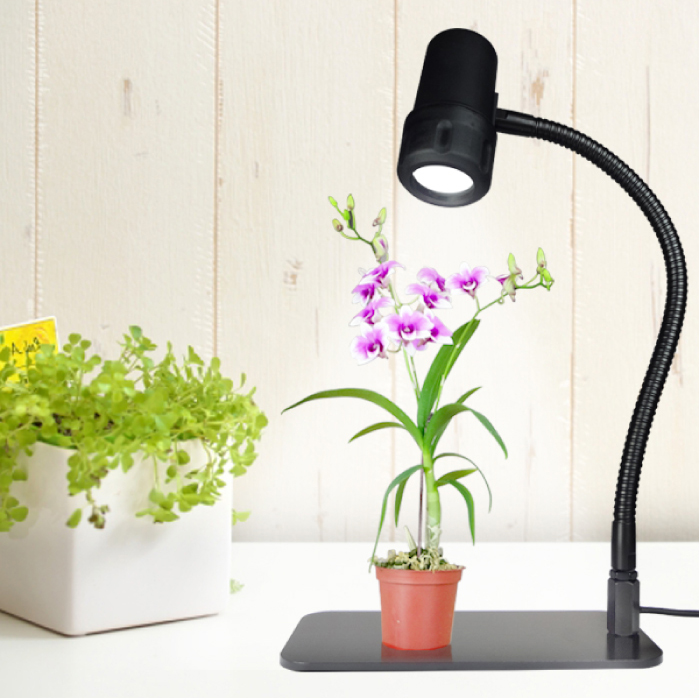
NLSS03BD4-AC LED Plant Light
Features
The LED spectrum is designed with uniform 660nm red and blue wavelengths to support plant germination, growth, and rhizome development, making it suitable for the seedling stage.
The 3000K setting increases 610-720nm red-light energy to support photosynthesis, photoperiod response, and growth rate while promoting flowering, fruiting, and seed germination.
- The 660nm red-light wavelength supports strong photosynthesis response in plants.
- This low-electromagnetic-emission lighting fixture is designed for plant growth applications.
- A constant-current IC driver keeps the light stable, soft, and free from glare and flicker.
- High-reliability LEDs support stable operation.
Applications
Plant Growth Lighting, Indoor Plant Lighting, and Potted Plant Lighting.
-
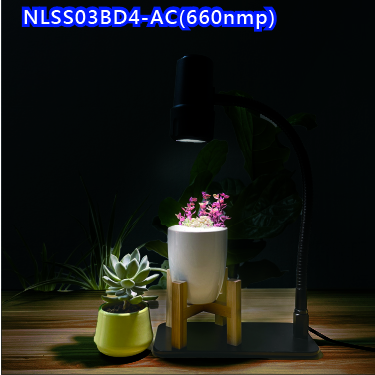 Red Light (660 nm)
-
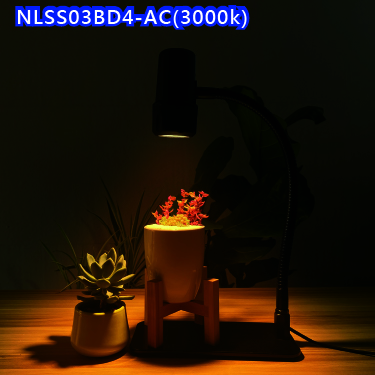 3000K
3000K
Specifications
| Certification |

 (power
supply) (power
supply)
|
|---|---|
| Wavelength | 660nm |
| PPFD | 40~500umol |
| Power Supply | AC100V - 240V |
| Housing Material | Plastic, metal |
| Operating Temperature | -10℃–40℃ (referring to the condition without freezing) |
|---|---|
| Service Life | Operating Temperature 25℃ 60,000hr ※Life span is based on initial illumination reduced to 70% |
| Protection Rating | IP50 |
| Standard Wiring | 2m (Wall-Plug AC/DC Adapter) |
Adding plant furnishings to indoor spaces has soothing and stress-relieving effects.

Placing plants in an office can help reduce stress and tension while improving focus. People are often more productive, efficient, and creative in environments with plants. In addition, plants release negative ions and can help reduce formaldehyde, absorb harmful gases, and improve indoor air quality.
Many scientific studies show that indoor plants can help improve mood, reduce stress and fatigue, and reduce indoor dust and volatile organic compounds.
Want to grow your favorite plants in offices and various indoor spaces?
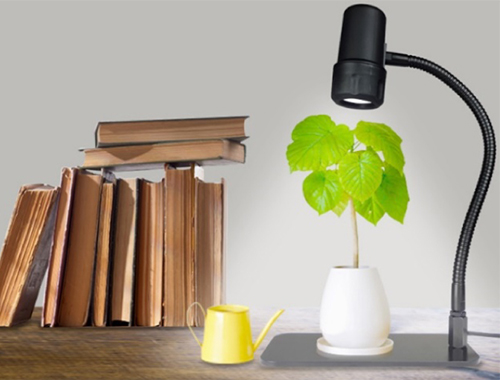
Photosynthesis supports leaf growth, flowering, fruiting, and seedling development. Plants can be
grouped by their light requirements.
Plants that require stronger light are sun-loving plants,
while plants that grow under lower light are shade-tolerant plants. Many foliage plants are
shade-tolerant, making them suitable for indoor use with plant lights.
Correlation between the number of light quanta and plant photosynthesis.
Different plants require different light levels. They are generally classified as sun-loving plants or shade-tolerant plants based on their light requirements.
Supplemental LED plant lighting should match each plant's light requirements to support photosynthesis.
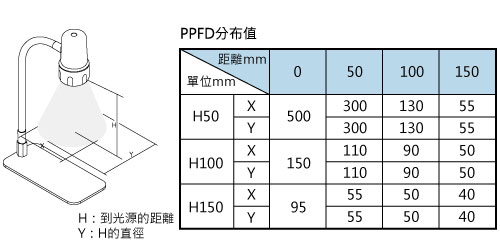
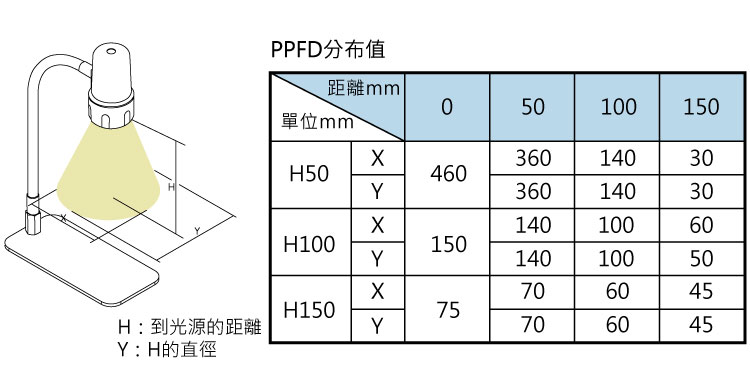
Photosynthetic Photon Flux Density PPFD (Photosynthetic Photon Flux Density)
PPFD represents the number of photons in the visible Wavelength range per unit time area. Its unit is μmol/㎡s.
The number of light quanta affects whether plants start photosynthesis.
NLSS03BD4-AC(660 nm) PPFD data
NLSS03BD4-AC(3000K) PPFD data
Application relationship of red and blue light quantum wavelengths
■ 400-520nm (blue): The absorption ratio of chlorophyll and carotene is larger, which has the greatest impact on photosynthesis and can help the development of plant roots and stems.
■ 610~720nm (red): Has a significant impact on photosynthesis, photoperiodic effect and growth rate.
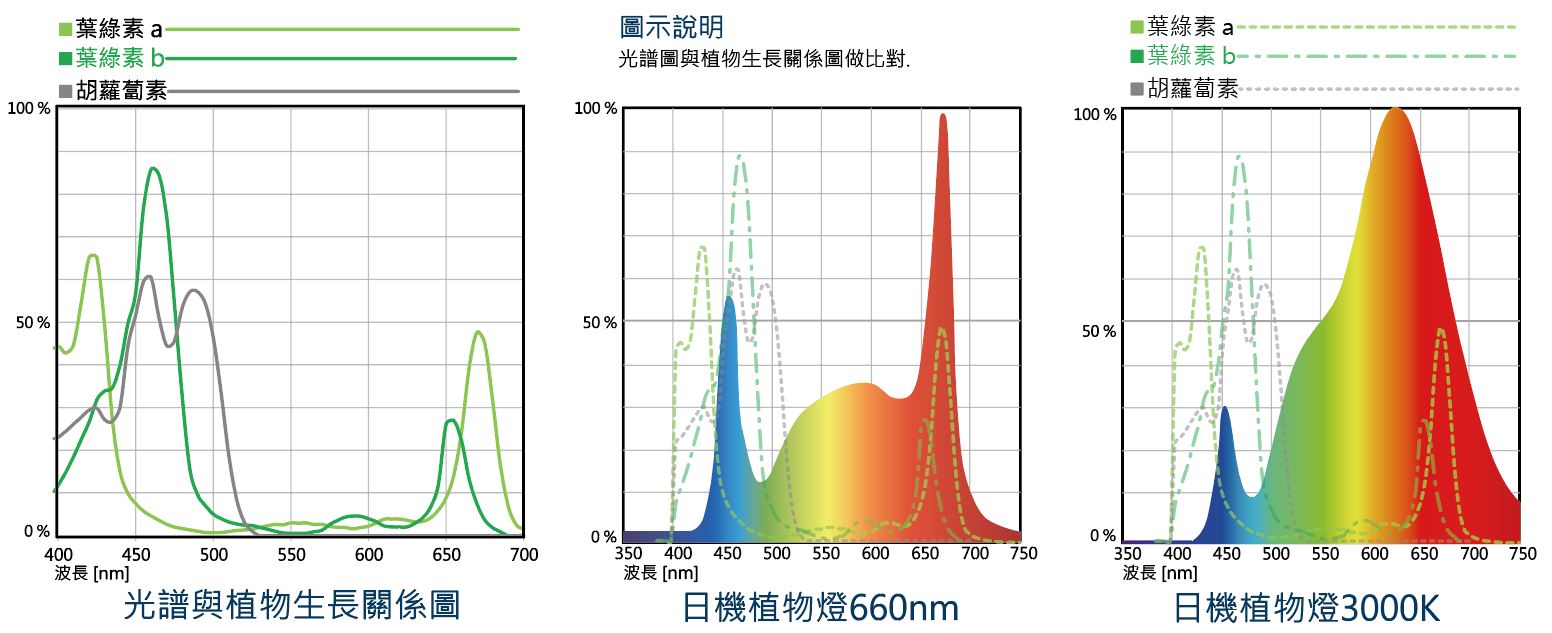
The relationship between plants and light
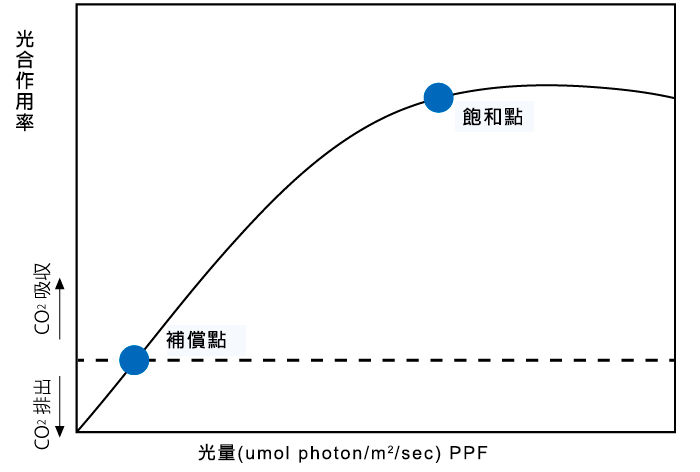
CO absorbed by plants during photosynthesis2and CO released
during respiration2The light intensity at the same level is called the light compensation
point.
After the light intensity exceeds the light compensation point, as the light intensity increases, the photosynthetic rate gradually increases. At this time, the photosynthetic intensity exceeds the respiration intensity. However, when the light intensity reaches a certain value and the light intensity is increased, the photosynthetic rate no longer increases. This is the light saturation point. The light saturation points of sun plants and shade plants are different.
When plants are grown indoors, supplemental lighting helps keep them healthy even when growth is slow. Indoor LED plant lights can provide the light levels needed for different plant types.
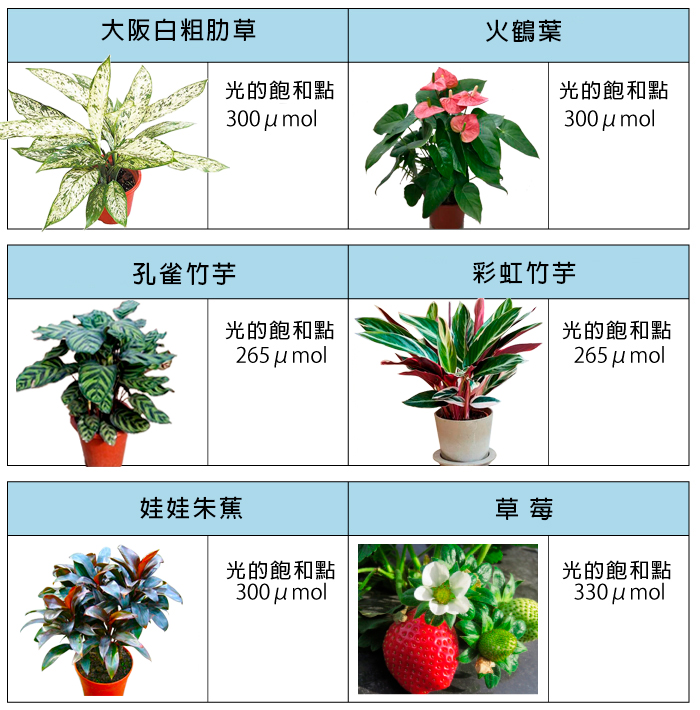
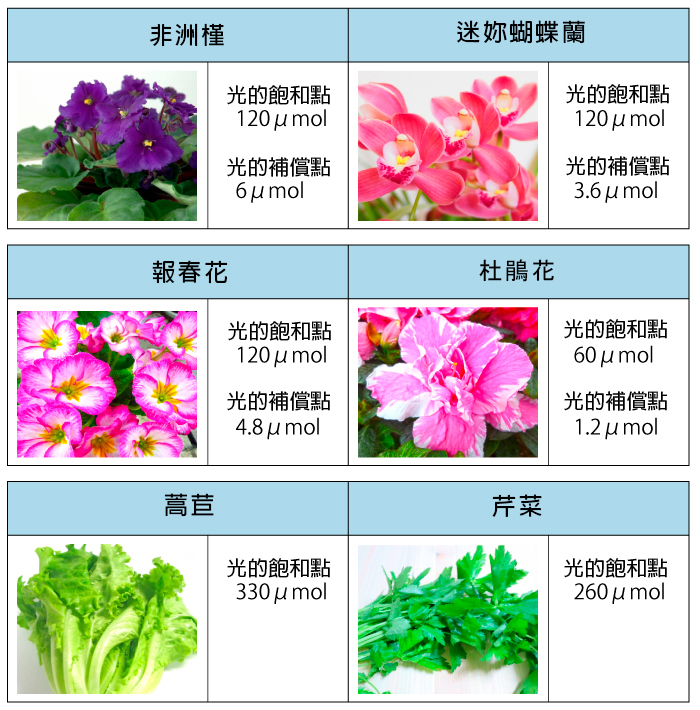
Light saturation point for foliage plants
The photon flux density, which measures the amount of light used by plants for photosynthesis, represents the plant. The amount of photons is called PPFD, and its unit is μmol.
Different plant species have different PPFD requirements. Generally, the light compensation point of foliage plants is about 10 μmol, and the light saturation point is about 300-500 μmol.
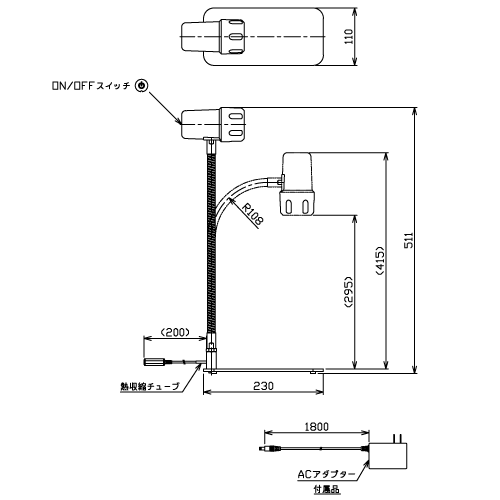
Dimensions